MEPs Demand Coordinated EU Response to Organised Crime and Corruption
751 Min Read
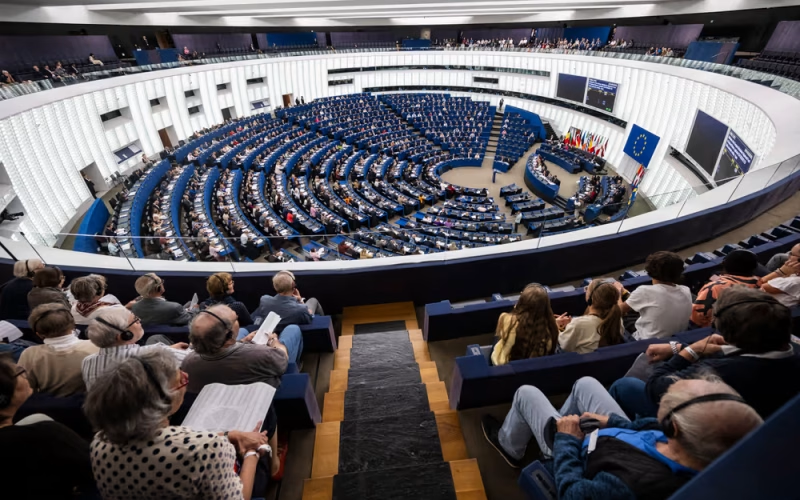
The European Parliament has adopted a resolution calling for a stronger, modernized EU anti‑corruption strategy that reflects emerging risks tied to organised crime and new technologies. MEPs said corruption undermines democracy, weakens the rule of law and fuels criminal activity, warning that perceived impunity can be as damaging as corruption itself.
The resolution urges evidence‑based risk mapping, tighter procurement and transparency rules, and harmonised standards on conflicts of interest, gifts, sponsored travel and lobbying. MEPs also want common rules on political financing and regular institutional reviews.
They called for deeper cooperation between national authorities and EU bodies such as Europol, Eurojust, EPPO and OLAF, along with more resources for EPPO and full participation by all member states. Parliament linked corruption to money laundering and asset concealment, urging stronger tools to trace and recover criminal proceeds and renewed action against crypto‑related risks and “golden visa” schemes.
MEPs said civil society and watchdogs must be involved throughout the strategy and called for stronger protections for whistleblowers and investigative journalists. They also urged full EU membership in GRECO to ensure EU institutions face the same scrutiny as national authorities.
The resolution calls for common indicators to assess anti‑corruption efforts, more measurable recommendations in rule‑of‑law reports, and stronger conditionality in the next EU budget. EU action against corruption could yield up to €58.5 billion annually, according to estimates, while recent surveys show widespread public concern across Europe.